
Case Study - August
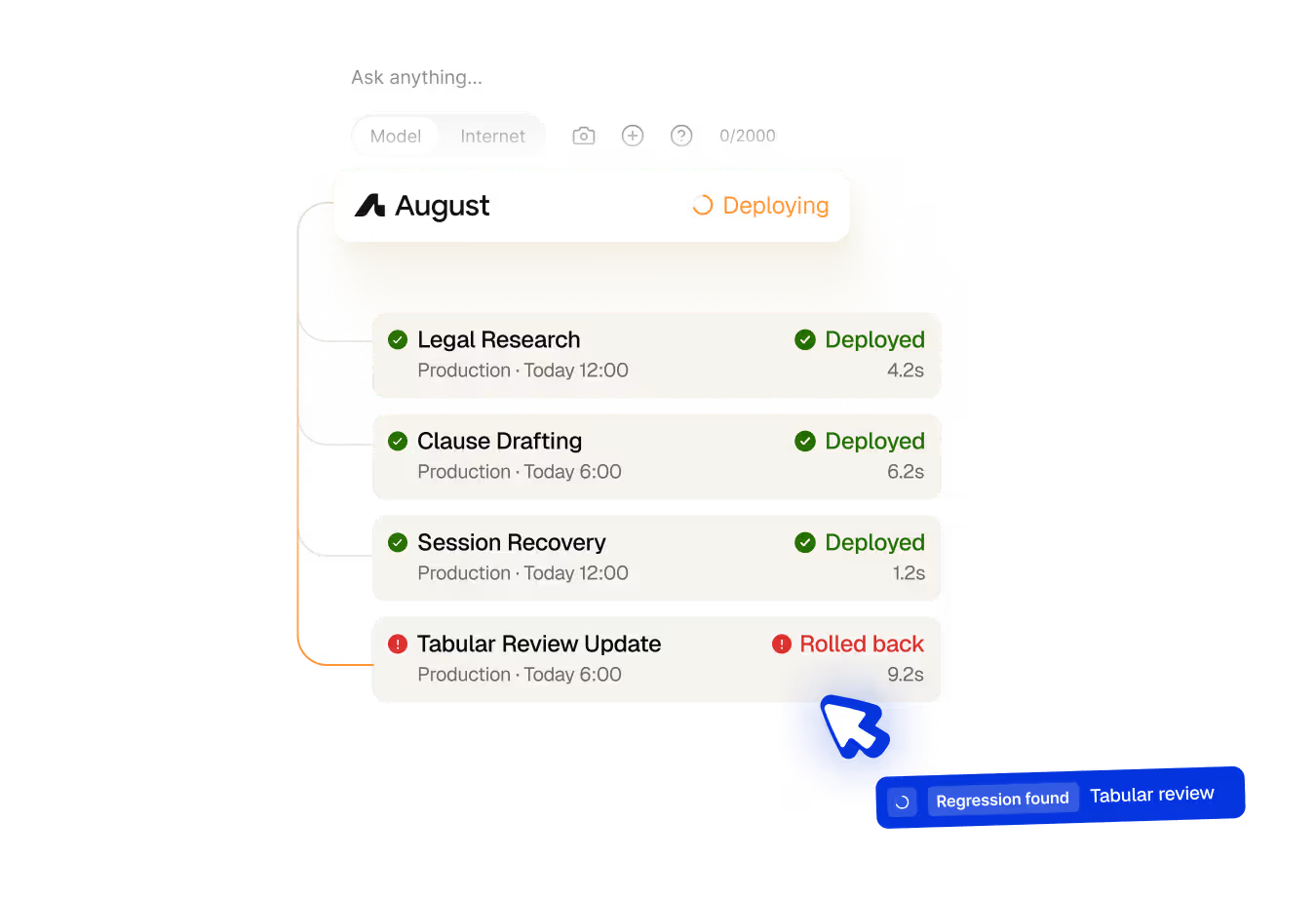
August deploys every six hours. 25% of those releases had to be rolled back


COMPANY
August is a legal tech platform that helps lawyers and legal professionals work more efficiently
INDUSTRY
Legal Tech ($7 Million)
COMPANY SIZE
11-50
FOUNDED
2024
2×
Faster deploys
to main since adopting Spur.
25%

Of release cycles
previously required rollbacks, now eliminated.
4h
Continuous test cycle
running across every critical flow, every four hours.
The Problem
Every six hours, August ships to customers. Engineers would test everything manually.
August is a legal platform with document uploads, deposition management, workflow tools, that’s built for lawyers who expect zero tolerance for failure. If a document upload breaks during a deposition, the platform becomes unusable at exactly the worst moment. That's the kind of bug August absolutely cannot ship.
And yet they deploy every six hours. Cascading cycles from production to internal users to pilots, letting them control exactly what each customer gets and how quickly. It's an unusually aggressive cadence for a product that serves legal professionals, and it was creating a testing crisis.
"Before Spur, it's honestly kind of embarrassing. I would send a message in Slack to our engineers before we deployed, telling them: stop what you're doing and go to the platform and test every single piece of it."
That meant pulling engineers off real work, features customers had asked for, bugs that mattered, to manually click through flows they'd already tested a dozen times. It was time-consuming, and it still wasn't working. Around 25% of every release cycle had to be rolled back. Bugs kept slipping through. Rollbacks demoralised the team. Salespeople lost confidence. Engineers felt like they were constantly breaking things.
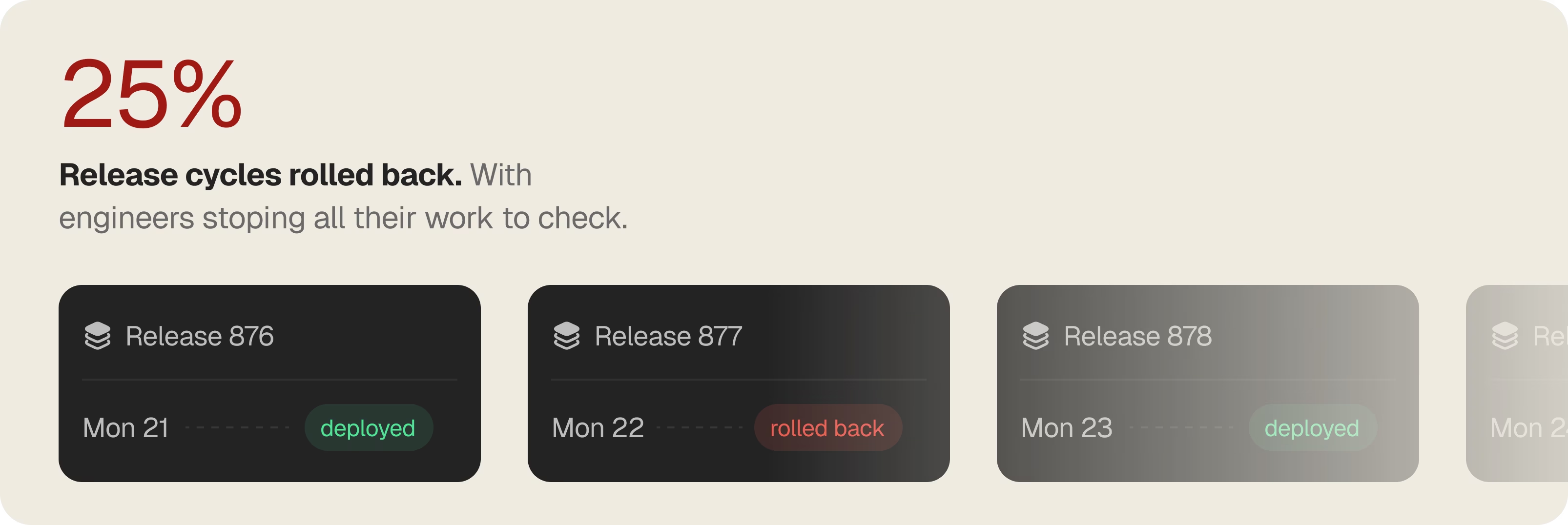
The math was also simply impossible. At a six-hour deploy cadence, with customers across four continents, you cannot manually test every critical flow before every release. Something was always going to get missed.
The Solution
Tests run every four hours. Thomas wakes up to failures, not customer complaints.
August uses Spur in two distinct ways, and Thomas is precise about the distinction.
The first is continuous production monitoring. Tests run on every critical flow, every four hours, across both production and internal demo environments. When something breaks, Thomas sees a Spur test failure when he wakes up, not a message from a customer. The day starts clean.
"Whenever there's any critical bug, I usually wake up to it and I see there's a Spur test failure. That allows us to start the day off very clean."
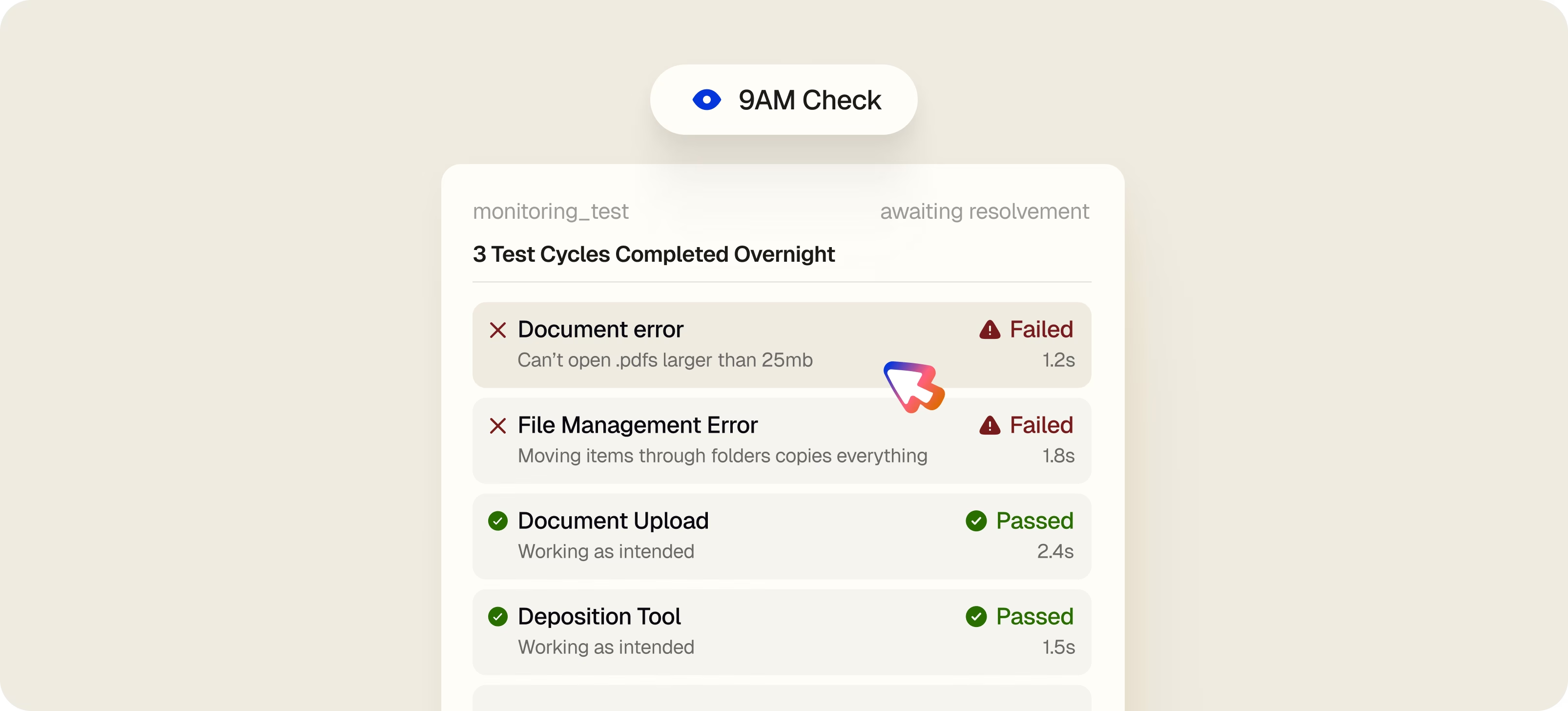
The second is full regression on every deployment. Beyond critical flows, Spur runs a complete suite covering every single operation on the platform, sharing documents, moving folders, every workflow a lawyer might touch. Every new deployment triggers a holistic check of the entire platform before it reaches customers.
Every engineer and every lawyer on the August team has access to Spur. It's not a QA tool that lives in one corner of the company, it's woven into how the whole team understands whether the product is working.
The Results
2× faster deploys, engineers who aren't afraid to ship and a team that actually trusts its own product.
The surface-level result is time. Engineers used to spend over an hour a day testing or fixing small bugs that should have been caught before they reached production. That time is gone. The rollback rate, once around 25% of every release cycle, collapsed.
But Thomas is more interested in what happened to the team.
"People are much more confident that the platform is going to work. Salespeople, lawyers that use our product every day, and even our engineers, because they have confidence that they're not going to be pulled into some major crisis every few hours."
That confidence compounds. Engineers can be more aggressive with the development cycle because they trust Spur to catch what they miss. Salespeople can promise reliability because they know the testing is real. Lawyers can rely on the platform because it's actually stable.
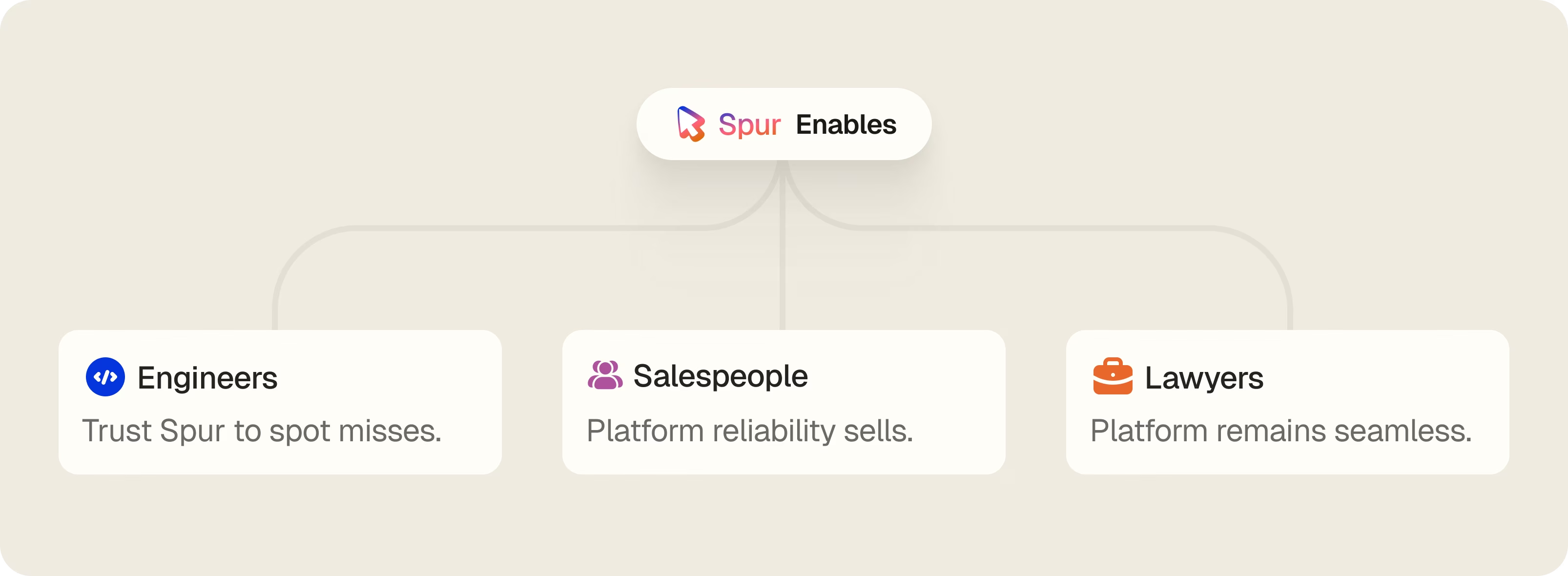
Thomas describes Spur as sitting at the intersection of three things that define a modern startup: the coding tools that help you build faster, the sales tools that help you understand customers better, and the design and product thinking that shapes what you build. Spur connects all three, because for the first time, you can ship new features every single day and actually trust that they work.
"I cannot imagine building a startup in today's world without agentic software testing. Every single moment of our time is so valuable. If you can't use agents to do a lot of this manual work, you're going to get left behind."
2×
Faster deploys
25%
Reduced deploy rollbacks
4h
Continuous test cycle


Key Insights
August deploys every six hours. That's not just fast, it's a fundamentally different relationship with shipping, one where manual testing before every release is mathematically impossible. Spur made that cadence sustainable. Not by slowing anything down, but by running continuously in the background so the team never has to choose between speed and quality.