
How MCP and AI are Changing Enterprise QA in 2026

Throughout the history of automated QA testing, there have been two big inflection points that drove great leaps in QA productivity. Today, we introduce the third.
The first was the introduction of ergonomic testing script languages, such as Playwright. QAs were able to automate tens of flows, test stable pages with scripts that would run through selectors. Teams started to pick up processes around this – Test driven development, requiring tests with every feature.
The second unlock was the advent of agents and LLMs. With each new SOTA model, the need for brittle selectors and script syntax became less relevant. With products such as Spur, automated QA has moved out of the realm of niche technical knowledge and into pure systems-thinking. QA stopped being limited by a mastery of automation languages.
The QA that uses Spur now spends their time thinking about what needs to be tested, and manages a swarm of agents to surface new insights.
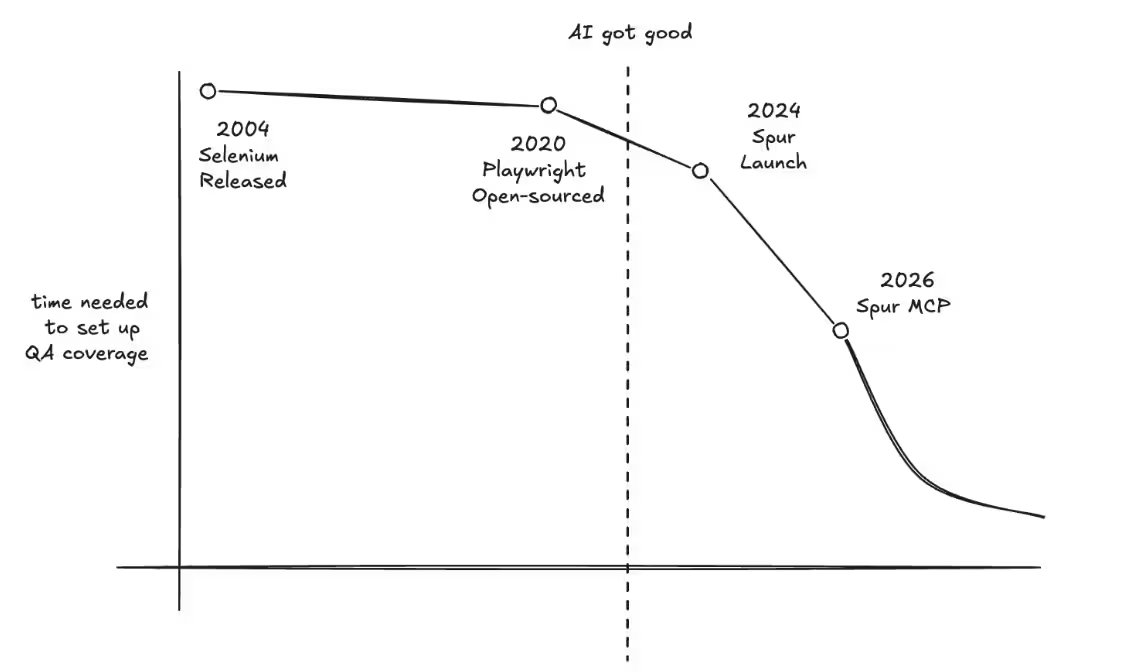
Today, we are proud to launch the third jump in QA productivity with the release of our MCP. We’ve greatly expanded Spur’s agentic capabilities. AI can now handle the entire testing loop, and now the only thing a QA needs is intent, while Spur handles all the busy work.
What is an MCP?
An MCP Server is a protocol initially described and published by Anthropic, and has since become the primary way AI can use third-party features. The Spur MCP allows your AI chats or agents (ChatGPT conversations, Claude agents, Copilot chats, …) to use Spur itself – writing tests, running them, even analyzing them. We’ve built parity to almost every feature on our application, so your AI agents have the full capability to operate your testing.
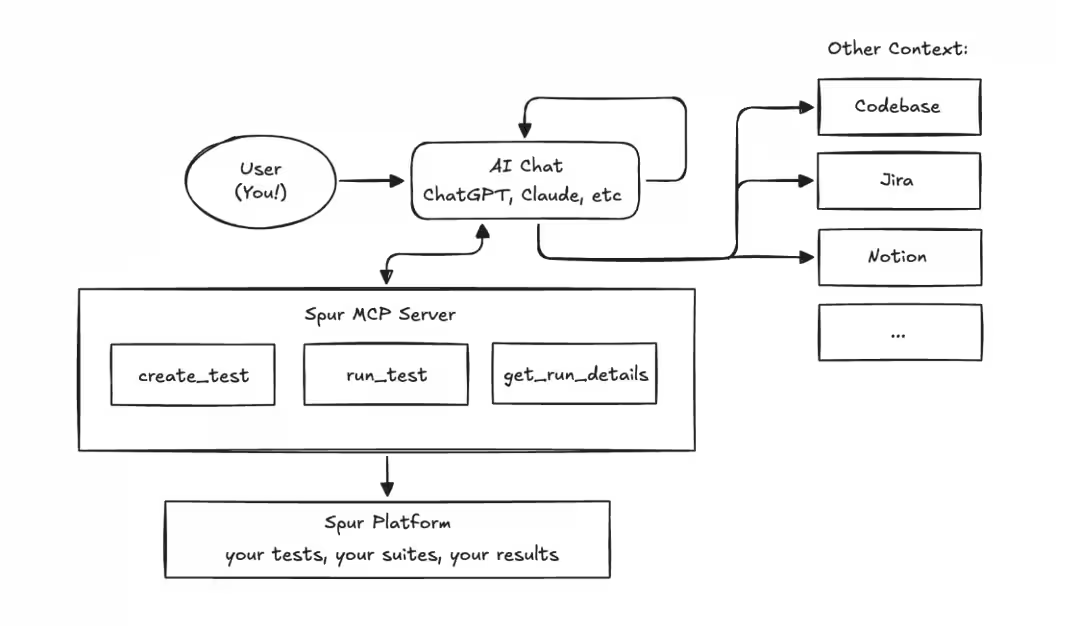
A note about AI hallucinations: The Spur MCP server gets used by your AI chats, so improper outputs from the model are not under our control. However, we have introduced several safeguards, as well as getting approval for any potentially destructive action.
We’ve rolled this feature out to all customers for a few weeks now, and already we are seeing extremely powerful usages of these tools.
Use Case 1: Writing Tests
Early in our development of Spur, the idea of generating the tests themselves was an enticing one. But the problem was that AI generated tests were often aimless and would assume large jumps in the user flow. Since then, two big changes have occurred. The first is the jump in model capabilities. The difference in agents and models from even late 2025 to now has been the difference between a fantastic, even fun generation experience and a frustrating one. The second was developing the MCP to bring novel context to the agent. Some users use the MCP in their codebase, giving literal complete context to the test writing, while others look internally at their own tests, learning from past test runs to map out their product. Improving intelligence and context led to shockingly good tests.
A big focus for us at Spur was how we could develop this feature while keeping Enterprise level diligence. QA has long since trailed behind development in adopting AI features, as hallucinations are unacceptable in the last line of defense. Early adopters of the Spur MCP have shown us ways they use the MCP to bulletproof their QA.
We’ve given agents the ability to operate Spur, to create tests and run them. A beta user of this feature showed us his Skills – files that contain instructions for the agent. His create-tests Skill instructs the agent to first review existing tests, pulling the writing style before creating these tests. Agents controlling Spur made it possible to then continuously run and review the results, polishing them until they were production ready. This continuous polish allowed him to create Production-ready tests from one prompt.
We tell our customers to treat the Spur agent like a colleague new to your product. Now, users can treat the Spur agent like a senior colleague – one who’s learned the product inside and out.
Use Case 2: Complete Testing Loop in CICD
Our customers continue to inspire us. An engineering firm we work with showed us the workflow they’ve set up with MCP, which we very quickly folded into our own dogfooding process. A PR opens, and a testing agent is instantly spun up. The agent looks over available Spur tests, finds the ones that test the feature, writes new tests if those don’t exist, and fully tests the feature. For teams that are always finding themselves ahead of their testing (like us!) this changes everything.
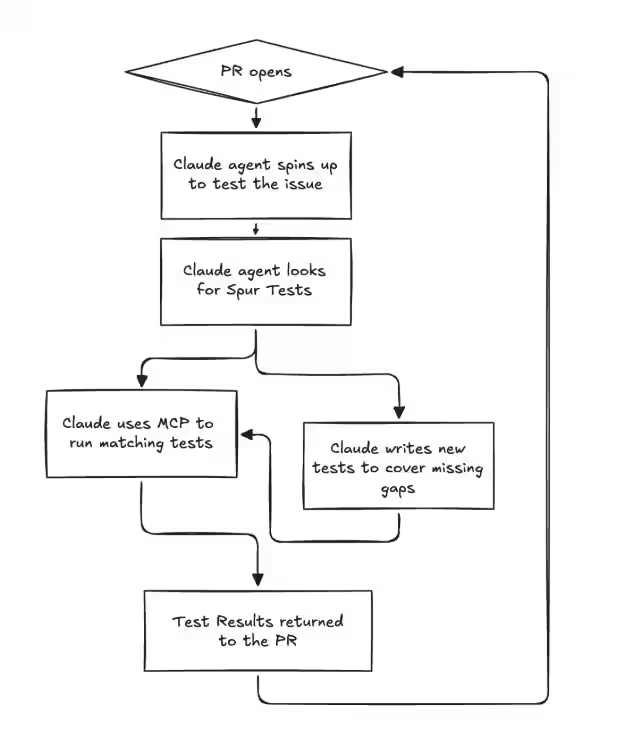
Test coverage automatically grows with your application.
“The future will increasingly be built for agents” is a common statement nowadays. By making all possible operations on Spur accessible for agents, workflows such as the ability to choose, create, and run only relevant tests on feature push go from the realm of wishful thinking to production ready. At Spur, we are making QA built for agents.
What does a QA look like now?
Software developers have long felt the productivity benefits of AI, while often leaving QA behind as an afterthought. The Spur MCP has provided the 10x productivity jump so desperately needed to the QA team. Creating resilient, useful and valuable tests has never been easier, to the point where 100% test coverage can become the starting point rather than the distant goal. An important milestone when code is pushed faster and faster.
And yet, quality-thinking has never been more important. Spur can create, perform, and analyze tests, but knowledge and expertise is needed to identify where platforms are likely to break, and to direct Spur. The QA of today, using Spur, is no longer running through flows manually, nor writing brittle Playwright scripts, nor writing Spur tests by hand. They are directing and managing agents, to cover more application surface than entire teams could.
We are excited to release these use cases as Agent Skills for your team to use today. Book a demo here!
We are hiring across engineering and sales to build the 10x productivity boost to QA so necessary in the age of 10x developers. Come join us!








.avif)