
How Hue Scales QA For Shoppable UGC Widgets Across 100s of Brands With Spur

.avif)


Challenge
Hue is a shoppable UGC video platform that helps brands embed authentic, TikTok‑style video reviews directly onto their e‑commerce sites. That means dozens of beauty and fashion brands, each with their own themes, widgets, and page layouts, all relying on Hue’s widgets to keep “Add to Cart” and quiz flows working 24/7.
Before Spur, QA for those embedded widgets meant manual spot‑checks by Alona across a small subset of stores, rotating spreadsheets and tickets, and constant anxiety that a change for one merchant might silently break another.
Solution
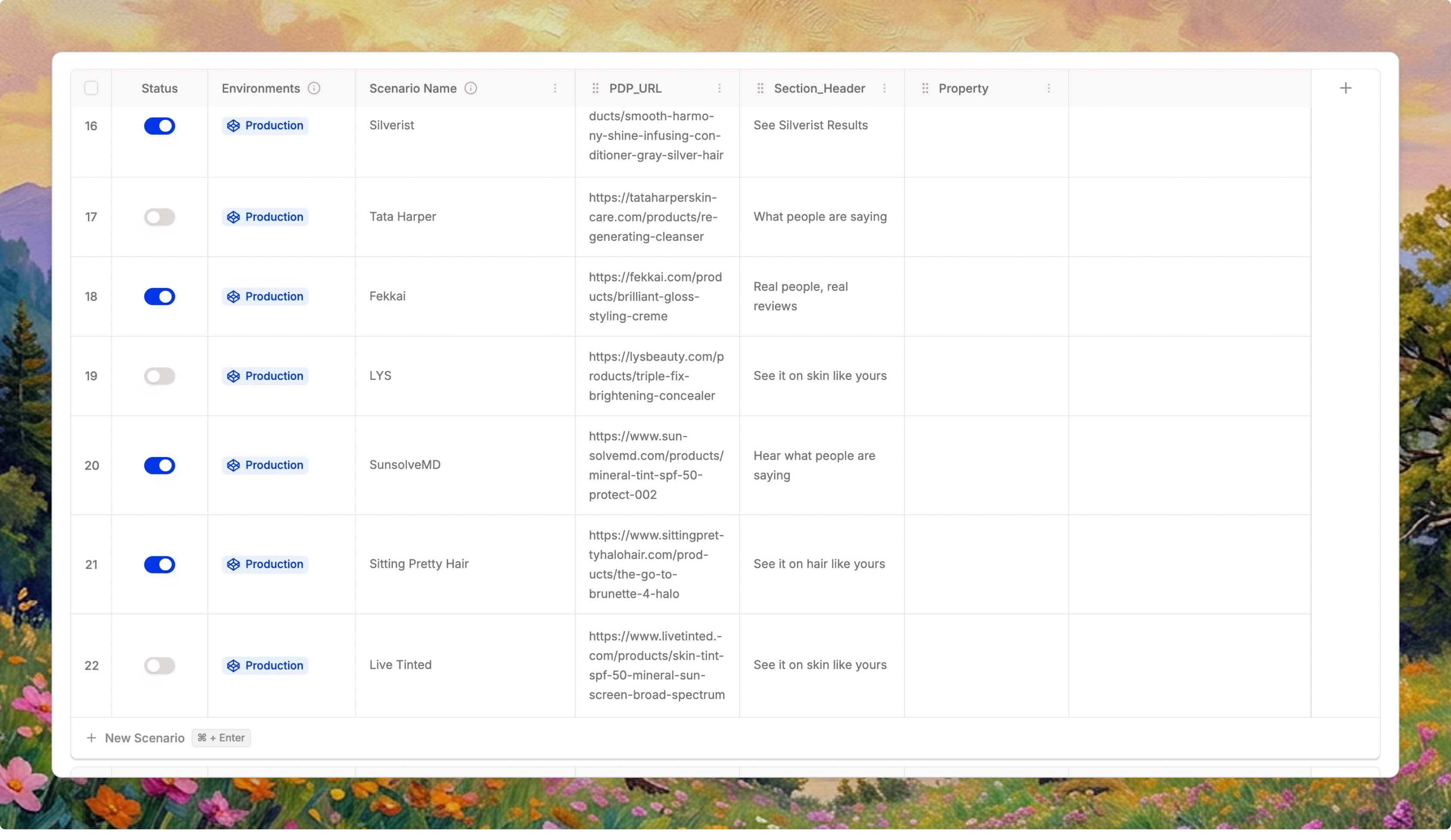
With Spur, Hue moved their critical widget flows into an agentic testing setup that runs across many brands from a single, shared scenario. In just a few weeks, Alona and the Spur team defined core scenarios (find widget, play UGC video, click Add to Cart or Shop CTA, validate cart and Klaviyo flows) and parameterized them via scenario tables so each new brand is covered as soon as she adds its URL.
Today, when Hue launches a new customer, Alona simply adds the store name, widget header, and live URL into Spur’s scenario table, and that store is automatically included in the next test plan run, with no separate test suite and no extra scripts.
Results
80% Reduction in manual QA time per release after adopting Spur (from ~2 hours of spot checks on ~10 stores to mostly reviewing automated results)
- 80%
Reduction in manual QA time per release after adopting Spur (from ~2 hours of spot checks on ~10 stores to mostly reviewing automated results) - 20+
Merchant stores and widget configurations now covered by Spur tests from a single shared scenario table - 1-2
Production releases per week, now protected by automated multi store widget regression runs in Spur
“Before Spur, we relied on Alona to manually spot check our widgets store by store. We knew that was not going to scale as we added more brands.”

Hue used Spur to replace fragile, store by store checks with one reusable scenario that now covers many brands and widget configurations, so Alona focuses on parameters and results instead of replaying the same flows.
Before Spur: manual, limited coverage
Before Spur, most of Hue’s widget QA lived in Alona’s manual spot checks.
She had a core list of stores she checked every release and a rotating list she checked when time allowed, which meant some brands were skipped each week.
“For up to 10 stores, it could take me two hours. If I needed to check everything carefully across all stores, I could spend almost a week. Now I can spend that time on something else.”
Each merchant had its own settings and theme, so a fix for one store could quietly break another without being noticed.
“Other agents failed almost on the second step. With Spur, it worked.”
Defining one shared widget journey
With Spur, Janvi and Alona turned Hue’s core widget interactions into a small set of shared scenarios:
- Scroll on the merchant site until the Hue widget is visible.
- Open the UGC video player from the widget or mini module.
- Click Add to Cart or Shop CTA.
- Confirm that the cart or quiz and Klaviyo flows behave correctly.
The flows live once in Spur. Scenario tables supply everything that differs by brand, for example:
- Store name and primary URL.
- Widget header or locator text.
- Device type and page type, such as PDP, collection, homepage, or quiz page.
This keeps the logic centralized, while letting Hue scale coverage to many stores.
“We increased the number of tested stores and covered all our core functionality. Before, we could miss something.”
Adding a new brand by updating the table
When Hue signs a new customer, Spur fits directly into the onboarding process.
- The team opens a task for Alona to add the store to Spur, including the go live date for the widget.
- Once the widget is live, she opens the relevant scenario table and adds a row with the store name, widget header, and live URL.
- From the next test plan run, Spur automatically includes that brand, using the same core steps as every other store.
If a merchant later adds the widget to new pages or adjusts the design, Alona usually only adds a URL or updates a header in the table, because the overall flow remains the same.
Scenario tables in practice
Hue’s scenario tables are compact matrices that describe test targets rather than scripts.
Typical columns include:
- Brand
- Store URL
- Device
- Widget location
- Scenario description
Spur reads each row and runs the same human like sequence on the right store and device, so Hue has one place to see which brands and pages are in coverage and how they are tested.
Issues Spur caught across stores
Once the shared scenarios and tables were in place, Hue expanded coverage to “a lot of stores,” with only a few excluded due to aggressive bot blocking tools.
Spur has already surfaced real issues, including:
- Stores where the Hue widget shipped without a working Add to Cart event, which prevented shoppers from adding products directly from the video.
- Stores where Klaviyo list IDs or app keys had changed without notice, which broke quiz email flows until Spur’s results revealed the failures.
Alona reviews the failures from each run, double checks them manually, and posts a concise summary for the team, who then handle Jira or Trello tickets and merchant communication.
How Alona’s role looks now
Spur changed how Alona spends her time, not whether she is needed.
She configures which scenarios run on desktop and which on mobile, and Spur handles consistent execution across many brands. Her manual effort is now mostly about validating failures, tracking known issues, and advising on fixes.
“We use Spur to confirm everything works as intended after production releases. The last few runs were stable with no issues, and that’s really nice.”
With this setup, Hue ships frequent changes with a higher level of confidence, adds new brands by updating a table instead of building new test suites, and relies on one shared scenario to keep shoppable UGC widgets working across many merchants.
Ready to transform your testing?
Schedule a demo to see how Spur can handle all your QA, save development time and prevent costly bugs.

Related Case Studies

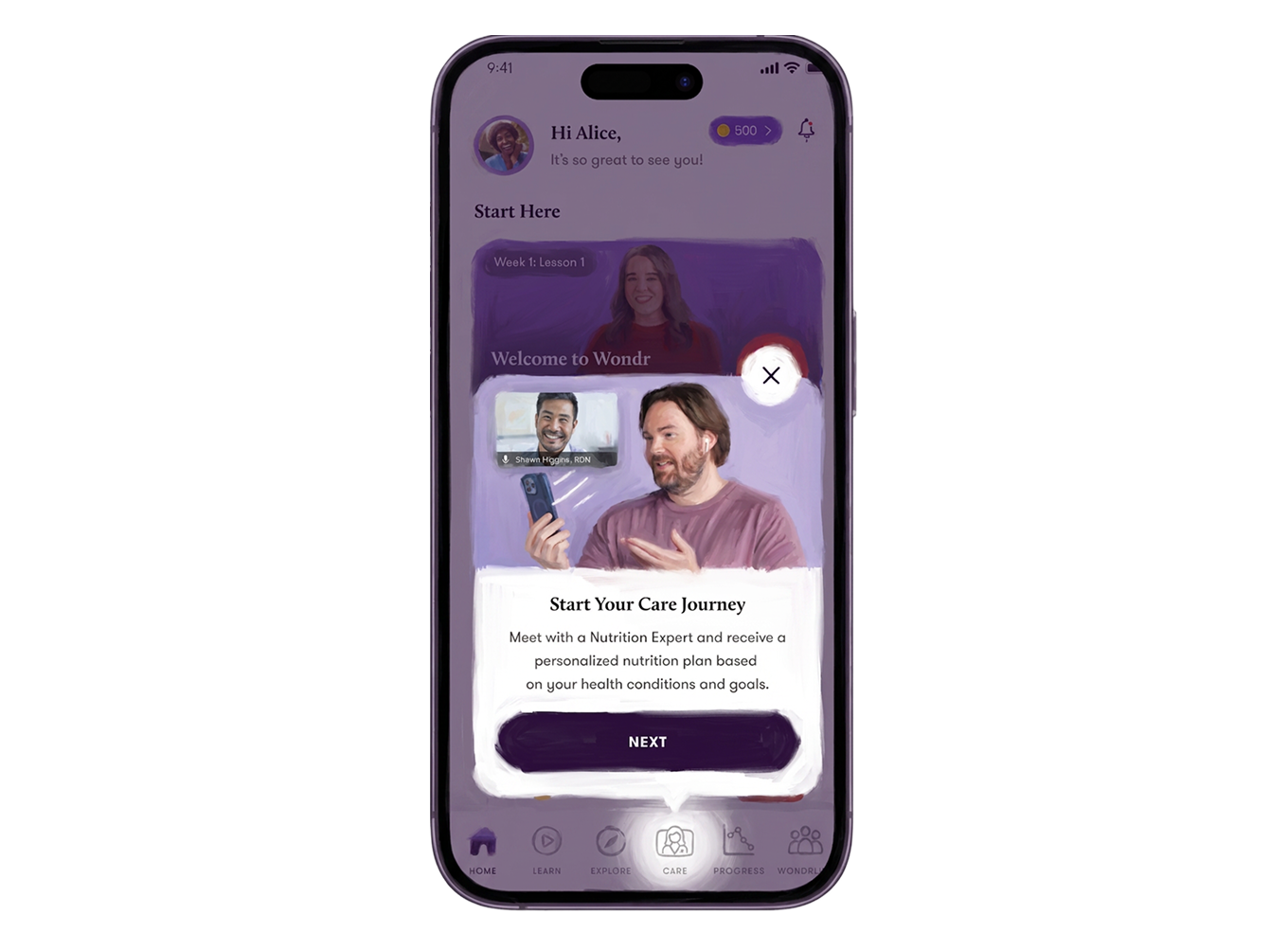
Wondr Health scaled QA coverage to 80% and cut regression time from days to minutes




From weeks of maintenance-heavy Selenium workflows to fast, reliable releases with Spur
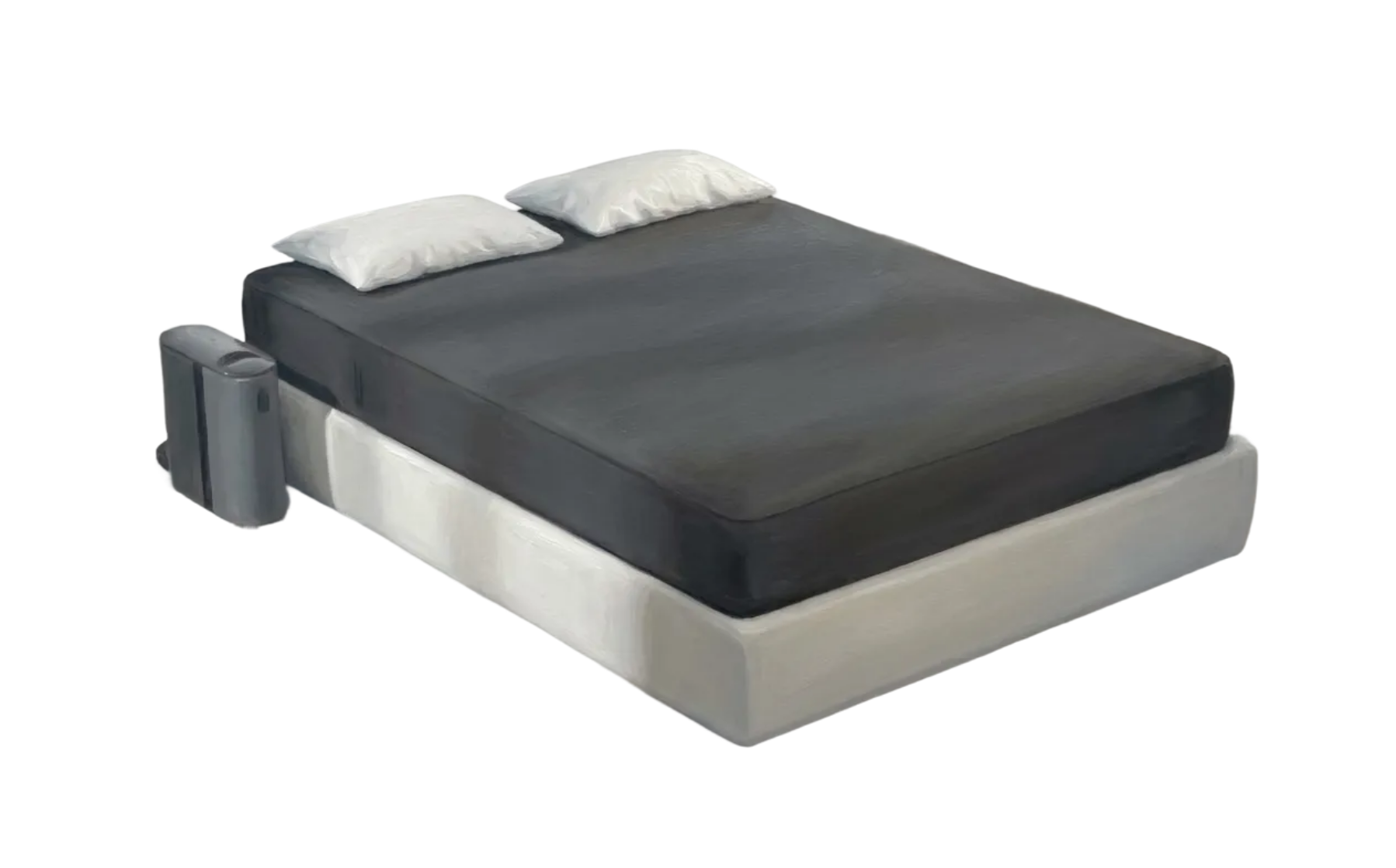
How Eight Sleep Turned Black Friday QA From All-Nighters to Automated Confidence


How a Leading Furniture Brand Automated Their Entire Release Process

How YC Hit 90 % Coverage on Its Mission‑Critical Applications Portal

AI-Powered QA That Never Sleeps


How Spur helped Wander ship 4x faster